Book Lovers Inc.
Romance Novel Reviews, Author Interviews, Commentary
Elements in Lit 201: The End
It’s been a while since I’ve posted one of these “lessons” and it will probably be the last one for quite a while to come, so it seemed fitting that we talk about endings.
With so many resources online these days and easier access to the authors, for the most part, us readers know ahead of time if a book will be a stand-alone or if it will be X part of a series, right? But what about when you read something and you feel that there’s no resolution, yet you know there will be no more? Or, probably worse than that is if a book that was mostly just okay to begin with ends on a cliff hanger? What do you do?!
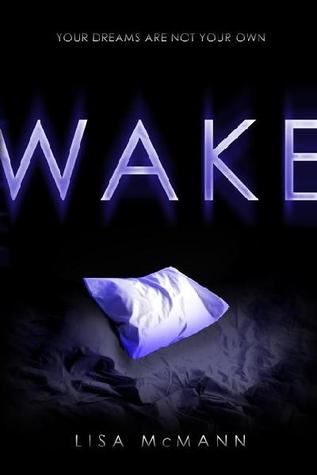
I’ve come across both of these situations over the last couple of years. In the first scenario, I was reading Lisa McMann’s Wake trilogy. They were quick, …
 Elements in Lit,featured,The Quirky Lover
  20 Jun 2012
 5 comments
Elements in Lit 201: The Publishing World
Up until now, we’ve talked about book content, genres, and other things of the sort. Thanks to some of the other BLI’ers, today we’re going to take a look at the business behind the books that we love. Publishing involves a whole lot more than just writing a book, getting it into print, then into the readers hands. As book reviewers, we have our own place in the process now, but let’s see what else is involved in the wide world of publishing:
Publishers come in all shapes and sizes. Within publishers, there are also “imprints”. For our purposes here, we’re going to discuss the definition of imprint that refers to the trade name that books are published under (though there are several different meanings, as can be found on the Wiki page). These are usually grouped into similar styles of books, like Tor, part …
Elements in Lit,The Quirky Lover 23 May 2012
4 comments
Elements in Lit 201: Ailments and Cures in Historicals
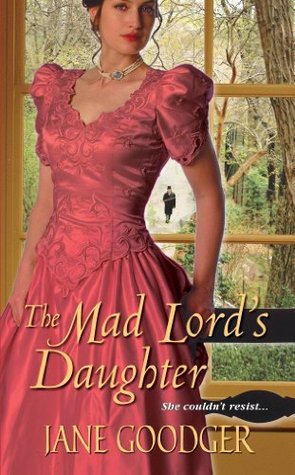
In my reading line up, I have Sacre Bleu by Christopher Moore, which leads off with the shooting death of Vincent Van Gogh. I also have The Mad Lord’s Daughter by Jane Goodger. What could these two books possibly have in common, you might ask? Probably very little, but they got me thinking about the types of illnesses we come across when reading about the past….and the usually scary ways the sickness was treated. So, I thought we’d spend a little time being online doctors today. Who’s with me?
A few other books have caught my attention, namely The Madness of Lord Ian Mackenzie by Jennifer Ashley and Uncertain Magic by Laura Kinsale. These books, along with the two previously mentioned, feature forms of mental illness in their pages (I say Sacre Bleu is included in this mainly because of Van Gogh’s real life issues; I’ve yet …
Elements in Lit,The Quirky Lover 25 Apr 2012
4 comments
Elements in Lit 201: Victorian Era, Gothic, and Steampunk
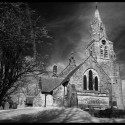
We’ve covered a little bit of all three items mentioned in the title in previous Genre and Elements posts, but as I’m reading Wicked as They Come by Delilah S. Dawson, the main character makes a statement about “[being] transformed into a curvy Victorian bombshell. Or a Gothic bombshell…” She continues on to describe the Gothic as “decidedly dark and sexy…” It got me thinking about the subtle differences between these styles of dress. Moreover, the book has a definite Steampunk overtones, with each ‘Bludman’ or ‘Pinkie’ having a clockwork animal in their charge. What better way to experience the differences (or similarities) than with pictures!
Click on the image if you would like to check out the store website.
So, let’s start the comparison: The Victorian Era coincides with “Queen Victoria’s reign from 20 June 1837 until her death on 22 January 1901” (source: Wiki) …
Elements in Lit,The Quirky Lover 21 Mar 2012
5 comments
Elements in Lit 201: Voices, Accents, and Languages
While Stella is off jet-setting this week, her next Romance and Me post will be delayed, which means you get me two weeks in a row 🙂 After last week’s post about killing zombies, I’m not sure whether to run screaming from you readers or to embrace you all as kindred spirits, lol. I loved the comments on that post and will go with the hugging option.
Today, though, I think we’ll head in another direction altogether. A few of the books I’ve been reading or listening to recently have had me thinking about languages. Being an international blog, we still publish here in English though it isn’t necessarily all of our native tongues. I know that some of us Book Lovers still prefer to read/listen in English anyway, despite this.
But even within the English language, there are such variations which can really affect the way a …
Elements in Lit,The Quirky Lover 7 Mar 2012
28 comments
Elements in Lit 201: How to kill a Zombie
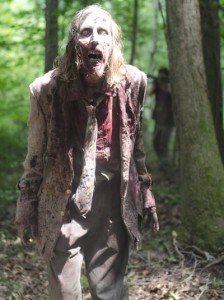
I’ve been hitting the Historical Romance themed posts pretty hard recently, so I thought I’d go in a very different direction today: the most effective ways to kill a zombie.
I hadn’t really thought much of zombies before, not seeing how a book could be interesting with just a bunch of re-animated corpses running around. But, my opinion has changed greatly with my new found love of the TV show, The Walking Dead, and also having listened to Max Brooks’ World War Z. What solidified my change of heart was a viewing of Shaun of the Dead the other night. Quirk in the apocalypse? For the win!
The thing that has fascinated me nearly as much as the personal stories of survival in these fictitious renderings, is the tools used for self-preservation. I thought we’d take a look at what weapons work best when faced with a brain eating mutant.
I …
Elements in Lit,featured,The Quirky Lover 29 Feb 2012
11 comments
Elements in Lit 201: Exceptions to the Rules
I’ve finally just finished reading Sarah MacLean’s Love by Numbers series with the last installment of Eleven Scandals to Start to Win a Duke’s Heart and I’ve discovered some recurring ideas, character, themes that bring the taste of life at that time to us, through historical romance novels.
The Regency Romance is made that much more appealing to its readers by the descriptions of the strict rules of society and of course, the main characters attempts to thumb their nose at said rules. With this in mind, I bring to you the top 6 exceptions to real Regency era rules. as portrayed in romance novels:
1- I’m bigger than you! We talked about the hierarchy of the British peerage before, but even if one character out ranks another, if they are smaller in demeanor and have done something to displease the hero of any tale, an intangible thing like rank …
Elements in Lit,The Quirky Lover,Uncategorized 15 Feb 2012
7 comments
Elements in Lit 201:
We talked a while back about the British peerages, but when reading through historicals, we quite often see the French titles mixed in with the British (English?) ones. The reason for this comes mostly from the royal families attempting alliances through the marriages of their sons and daughters.
In my first search through the information, names popped up like “Cleves”, which was the surname associated with the Count of Nevers. It’s also familiar because it was connected to one of Henry VIII’s wives, though Anne of Cleves was of German desent. (Henry VIII was considered to be “King of England, France, and Ireland” so it’s no surprise that his name would pop up, but also because he’s a subject I’ve looked into a lot over the last year :-p ) I’m sure though, that somewhere in Anne’s family tree, a connection would be made to that French house …
Elements in Lit,The Quirky Lover 1 Feb 2012
7 comments
Elements in Lit 201: Today’s Lesson – Weaponry
First off, let me start with a slight apology for the last post. It was a confusing one at best but I may have made it worse. I totally blame the cold meds! Anyway, we’ll take a look again at forms of address down the road with a more concise (less medicated) list.
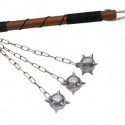
For today though, I wanted to look at something different. I’ve been feeling a bit feisty, listening to zombie apocalypse audiobooks and such. I think there would be a great cathartic release at being able to wield a weapon against a foe (though, I’d probably be squeamish when it came right down to it.) To this end, I thought we’d take a look at weapons we might find in stories through the ages.
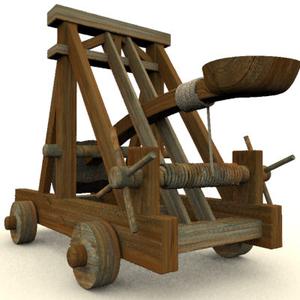
The catapult is a legendary tool, used in the Middle Ages to lay sieges on many castles. This one is a bit bulky to …
BLI Features,Elements in Lit,The Quirky Lover 18 Jan 2012
17 comments
Elements in Lit 201: Peerage continued
In our last lesson, we talked about the different ranks in British nobility. It drew a lot more questions (which I love!) and also helped me personally answer a Jeopardy question 🙂 The nature of these questions was about the proper way to address each level of the Peerage and about other countries’ classifications. So, today, I thought we’d take a look at how to address our ‘betters’.
In my search for info, I found a great site that goes into to lots of detail about how greet, in writing or speech, the nobility, among many other details, including the role of women. I can see now how complicated those times must have been, knowing how to refer to someone and who would be considered equals or subordinates. I’ll give a few examples here:
If you were writing a letter to a Duke, you would address it to “Dear Duke of…” …
Elements in Lit,The Quirky Lover 4 Jan 2012
6 comments



Unfortunately Google Friend Connect will stop working for non Blogger blogs at the start of March.
To stay up-to-date use one of the other options above to subscribe to the newest Book Lovers Inc. action.Thank you!
| |||||||||
| 5 Stars: Perfect! I Love It! | |||||||||
| 4 Stars: Awesome Book! | |||||||||
| 3 Stars: I Liked It! | |||||||||
| 2 Stars: Not bad, but maybe not for me. | |||||||||
| 1 Star: Didn't like it! Did Not Finish it. | |||||||||
 | | | | | |||||


 Blog RSS Feed
 Follow Me on Twitter
 My Facebook